

Does the oven ignition needle affect the temperature control?
Jul 09, 2025
Leave a message
In the world of kitchen appliances, ovens are indispensable tools for cooking delicious meals. Among the various components of an oven, the ignition needle plays a crucial role. As a leading supplier of oven ignition needles, I've often been asked whether the oven ignition needle affects temperature control. In this blog, I'll delve into this topic, exploring the relationship between the ignition needle and temperature control from a scientific perspective.
The Function of the Oven Ignition Needle
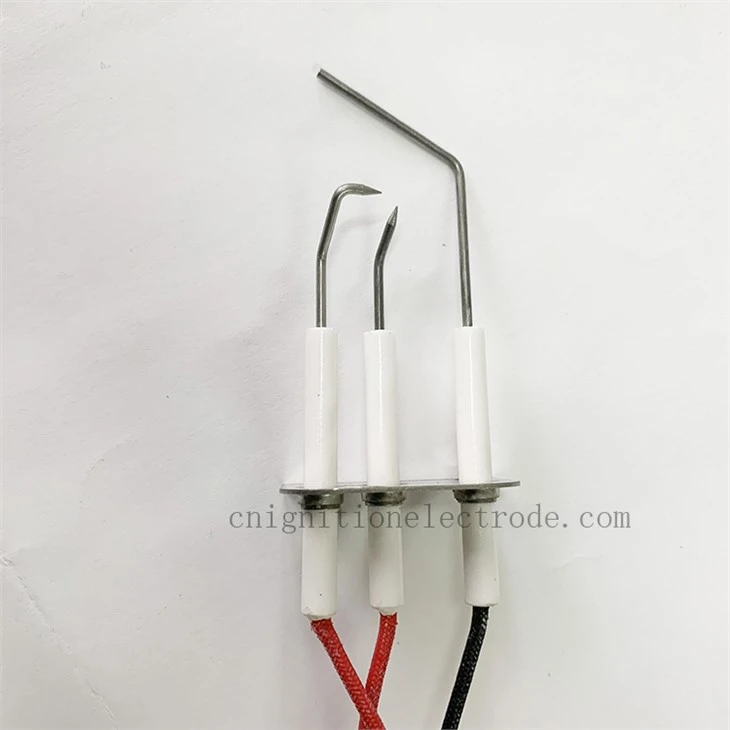
Before discussing its impact on temperature control, it's essential to understand the basic function of the oven ignition needle. The ignition needle, also known as an ignition electrode, is responsible for creating a spark to ignite the gas in the oven. When you turn on the oven, an electrical current is sent to the ignition needle. The high - voltage electricity generates a spark at the tip of the needle, which then ignites the gas flowing into the oven's burner. This initial ignition is the first step in the oven's heating process.
For those interested in different types of ignition components, we offer a wide range of products, such as the Oven Spark Plug and Gas Oven Spark Plug. These products are designed to provide reliable ignition for various types of ovens.
How Temperature Control Works in an Oven
Oven temperature control is a complex process that involves multiple components working together. A thermostat is the primary component responsible for regulating the temperature. The thermostat senses the temperature inside the oven and sends signals to the gas valve or heating element. When the temperature drops below the set point, the thermostat signals the gas valve to release more gas (in a gas oven) or the heating element to turn on (in an electric oven). Conversely, when the temperature exceeds the set point, the thermostat signals the gas valve to reduce the gas flow or the heating element to turn off.
Indirect Impact of the Ignition Needle on Temperature Control
While the ignition needle itself does not directly control the temperature, it can have an indirect impact on temperature control in several ways:
1. Ignition Failure
If the ignition needle fails to create a spark, the gas will not ignite, and the oven will not heat up. This is an obvious case where the ignition needle affects the oven's ability to reach and maintain the desired temperature. A faulty ignition needle can lead to intermittent ignition or complete ignition failure. For example, if the ignition needle is dirty or damaged, the spark may be weak or inconsistent. This can result in the gas not being ignited properly, causing the oven to heat up slowly or not at all. In such cases, the thermostat will continue to signal the gas valve to release more gas, but without successful ignition, the temperature will not rise as expected.
2. Uneven Ignition
Even if the ignition needle manages to create a spark, uneven ignition can occur. Uneven ignition means that the gas is not burned uniformly across the burner. This can lead to hot spots and cold spots inside the oven. As a result, the temperature may vary significantly within the oven cavity, making it difficult for the thermostat to accurately regulate the overall temperature. For instance, if one side of the burner has a stronger flame due to better ignition, that area of the oven will be hotter than the rest. The thermostat, which measures the average temperature, may not be able to compensate for these local temperature variations effectively.
3. Delayed Ignition
Delayed ignition is another issue related to the ignition needle that can affect temperature control. When there is a delay between the opening of the gas valve and the ignition of the gas, an excessive amount of gas may accumulate in the oven. When the gas finally ignites, it can cause a sudden and intense burst of heat. This can lead to overshooting of the set temperature, as the thermostat may not be able to react quickly enough to the rapid increase in temperature. After the overshoot, the thermostat will then try to bring the temperature back down, resulting in a cycle of temperature fluctuations.
The Importance of a Reliable Ignition Needle for Consistent Temperature Control
To ensure consistent temperature control in an oven, it is crucial to have a reliable ignition needle. A high - quality ignition needle, such as the ones we supply, is designed to provide a strong and consistent spark. This ensures that the gas is ignited quickly and uniformly, reducing the chances of ignition failure, uneven ignition, and delayed ignition.
Regular maintenance of the ignition needle is also essential. Cleaning the ignition needle periodically can prevent dirt and debris from accumulating on the tip, which can affect the spark. Inspecting the ignition needle for damage, such as cracks or corrosion, and replacing it if necessary, can also help maintain its performance.
Other Components Related to Ignition and Temperature Control
In addition to the ignition needle, there are other components related to ignition and temperature control in an oven. For example, the Ignition Electrode For Wall - hung Boiler is a similar component used in wall - hung boilers. Although it is not directly related to ovens, it shares some similarities in terms of its function of creating a spark to ignite gas.

The gas valve is another important component. It controls the flow of gas into the oven based on the signals from the thermostat. A faulty gas valve can also cause temperature control problems, even if the ignition needle is working properly. Therefore, it is important to consider the entire system when troubleshooting temperature control issues in an oven.
Conclusion
In conclusion, while the oven ignition needle does not directly control the temperature, it has a significant indirect impact on temperature control. A reliable ignition needle is essential for ensuring proper ignition, which in turn is crucial for the oven to reach and maintain the desired temperature consistently. By understanding the relationship between the ignition needle and temperature control, oven users can take appropriate measures to maintain and troubleshoot their ovens.
If you are in the market for high - quality oven ignition needles or other ignition components, we invite you to contact us for procurement and further discussion. Our team of experts is ready to assist you in finding the right products for your needs.
References
- "Oven Repair Manuals", Various manufacturers' official publications.
- "Principles of Gas Appliance Ignition and Temperature Control", Industry - specific technical literature.