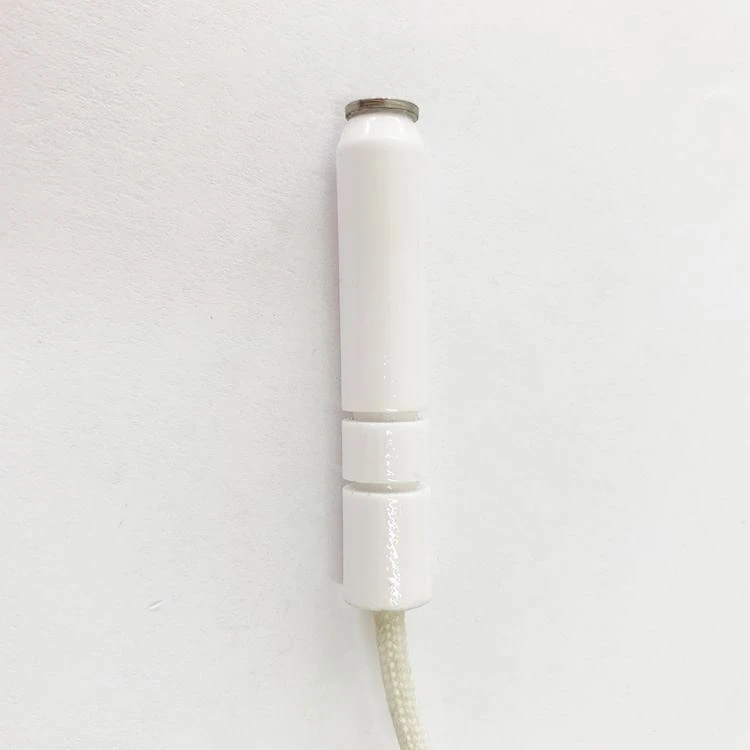
Ignition electrode introduction
Apr 04, 2022
Leave a message
The ignition electrode is one of the components of the ignition device and is located in the gas stove part. The ignition electrode has the advantages of sensitive ignition, exquisite and beautiful appearance, stable detection, durability, strong anti-aging ability and high temperature resistance. The ignition methods of gas stoves are mainly divided into piezoelectric ceramic ignition and electric pulse ignition. Modern gas stove igniters are mostly pulse igniters.
1 Principle of ignition electrode
The ignition methods of gas stoves are mainly divided into piezoelectric ceramic ignition and electric pulse ignition. Modern gas stove igniters are mostly pulse igniters. The pulse igniter is a pulse high-frequency oscillator composed of electronic components. A tip discharge is performed, and the gas on the gas stove is ignited by the spark of the discharge. This igniter ignites and discharges continuously. Press the knob, the pulse igniter starts to ignite; release the knob, the pulse stops igniting.
2 Determine whether the ignition electrode of the integrated stove is normal
The ignition electrode is generally not easy to be damaged. If the ignition electrode does not discharge, it may be that the battery is dead, or the pulse igniter is faulty, not necessarily the ignition electrode. Home inspection.
3 Reasons why the ignition electrode does not discharge
1. The battery is low in power, or simply out of power. To expand the range, the loose battery also belongs to this type.
2. The switch mechanism is faulty. The circuit switch of the cooker is mostly attached to the edge of the knob of the gas cooker. The stroke of the switch is very small. When it cannot be bounced, the user often cannot find it by hand.
3. The pulse igniter of the gas stove is faulty, including the short-circuit discharge caused by the rupture of the discharge electrode and its insulating porcelain tube.